
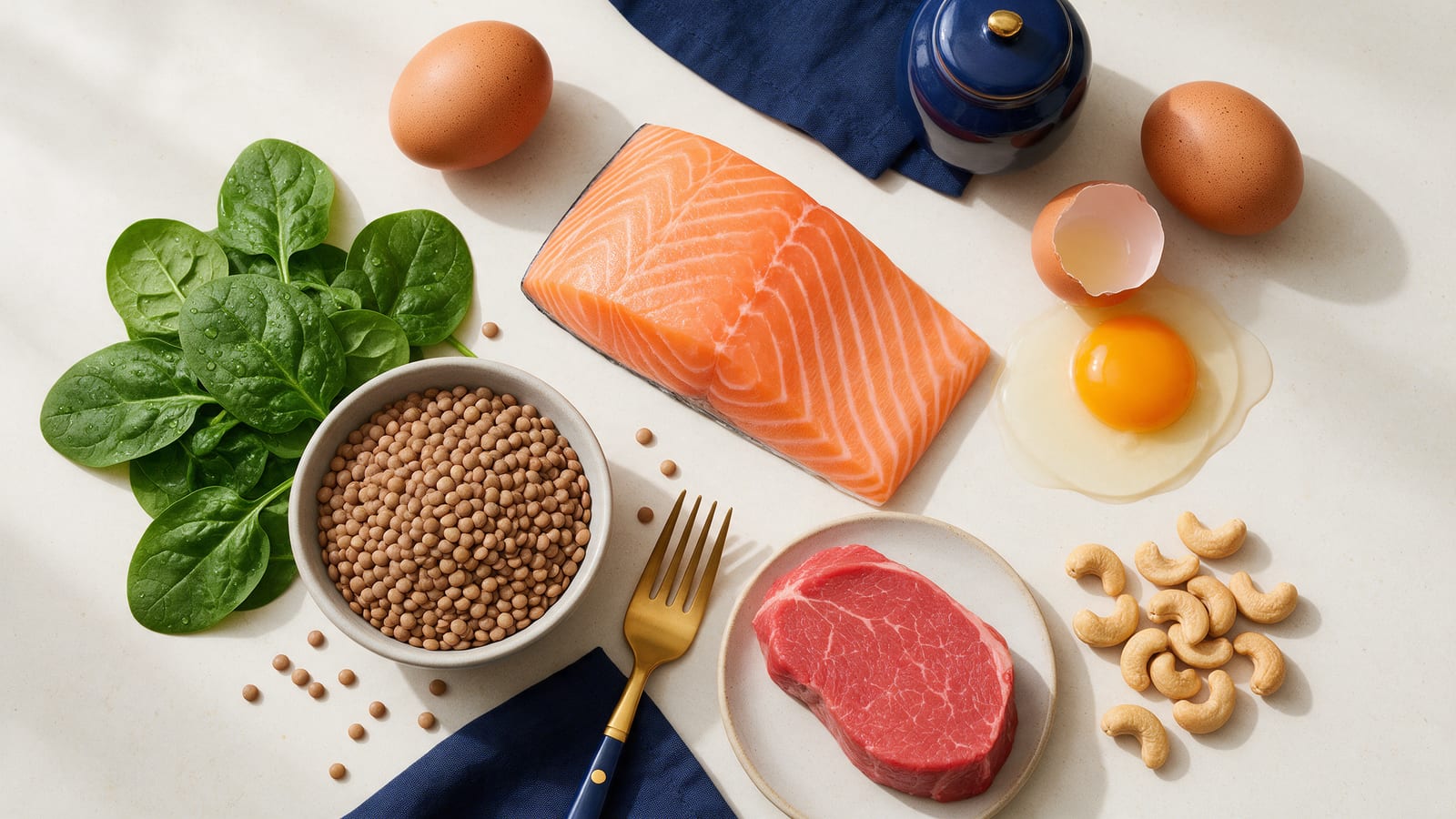
Iron and vitamin B12 are essential nutrients that support normal body functions, including oxygen transport, red blood cell formation, and cellular metabolism. Iron helps hemoglobin carry oxygen from the lungs to body tissues, while vitamin B12 supports healthy red blood cell formation, nervous system function, and DNA synthesis. Both nutrients play important roles in processes connected to the body’s energy metabolism.
When iron or vitamin B12 levels are inadequate, health problems can develop, and deficiencies may be associated with fatigue or weakness. However, these nutrients do not automatically increase energy in people who already get enough.
In this article, we will explore the roles of iron and vitamin B12 in normal energy metabolism, what research says about their deficiencies, and how to understand their importance for overall health.
What Is Iron and How Does It Support Energy Metabolism?
Iron is an essential mineral that helps hemoglobin carry oxygen from the lungs to body tissues. It is also part of myoglobin, a protein that supplies oxygen to muscles and supports muscle function. Iron also supports normal cell function, growth, and the production of certain hormones.
Foods contain two main forms of iron: heme iron, found in meat, seafood, and poultry, and nonheme iron, found in plant foods and fortified foods.
Source: NIH Office of Dietary Supplements — Iron
Iron Deficiency and Its Link to Fatigue
Iron deficiency occurs when the body does not have enough iron. When iron stores become depleted, hemoglobin levels can decline, leading to iron-deficiency anemia. According to the NIH, people with iron-deficiency anemia may experience fatigue, weakness, and difficulty concentrating.
Iron deficiency can also affect exercise performance and cognitive function. However, fatigue can have other causes, so it does not always mean someone has low iron.
Source: NIH Office of Dietary Supplements — Iron: Fact Sheet for Health Professionals
What Is Vitamin B12 and How Does It Support Normal Energy Metabolism?
Vitamin B12 is a water-soluble vitamin that supports healthy red blood cell formation, nervous system function, and DNA synthesis. It also helps enzymes carry out important metabolic processes in the body.
Vitamin B12 deficiency can affect red blood cell production and may contribute to fatigue and weakness. However, taking extra B12 does not necessarily increase energy in people who already get enough.
Source: NIH — Vitamin B12: Fact Sheet for Health Professionals
Vitamin B12 Deficiency and Its Link to Fatigue
Vitamin B12 deficiency can develop when the body cannot absorb enough vitamin B12 or when dietary intake is inadequate. According to the NIH, symptoms may include fatigue, weakness-related blood changes, and neurological problems such as numbness or tingling in the hands and feet.
Vitamin B12 deficiency can also cause megaloblastic anemia, which affects healthy red blood cell formation. Because symptoms may take years to appear, recognizing and addressing a deficiency is important.
Source: NIH Office of Dietary Supplements — Vitamin B12
Iron vs. Vitamin B12: Key Differences
| Key Difference | Iron | Vitamin B12 |
|---|---|---|
| Type of nutrient | Mineral | Water-soluble vitamin |
| Main function | Helps hemoglobin carry oxygen from the lungs to body tissues | Supports red blood cell formation, nervous system function, and DNA synthesis |
| Role in energy metabolism | Supports oxygen transport and muscle metabolism | Helps enzymes perform important metabolic reactions |
| Role in blood health | Needed to make hemoglobin, which carries oxygen in red blood cells | Needed for normal red blood cell development |
| Common deficiency effects | Iron-deficiency anemia, fatigue, weakness, and difficulty concentrating | Megaloblastic anemia, fatigue, and possible numbness or tingling |
| Food sources | Meat, seafood, poultry, beans, lentils, nuts, and iron-fortified foods | Fish, meat, eggs, dairy products, and vitamin B12-fortified foods |
| Absorption | Heme iron is generally absorbed more readily than nonheme iron | Absorption of food-bound B12 requires stomach acid to release it from food proteins, followed by intrinsic factor |
| How status may be assessed | Blood tests may include hemoglobin and ferritin, which reflects iron stores | Blood tests may include serum vitamin B12 and, when appropriate, methylmalonic acid (MMA) |
Why Do These Differences Matter?
Iron and vitamin B12 deficiencies can both contribute to anemia and fatigue, but they are not the same condition. Iron deficiency can reduce the body’s ability to produce hemoglobin, while vitamin B12 deficiency can interfere with normal red blood cell development and affect the nervous system.
Fatigue alone cannot confirm a deficiency because it can have many causes. Healthcare professionals may use blood tests, medical history, and symptoms to determine whether someone has low iron, low vitamin B12, or another condition.
Both nutrients are important for normal health, but taking extra iron or vitamin B12 does not automatically improve energy in people who already get enough.
Source: NIH Office of Dietary Supplements — Iron: Fact Sheet for Health Professionals
Source: NIH Office of Dietary Supplements — Vitamin B12: Fact Sheet for Health Professionals
Food Sources of Iron and Vitamin B12
Iron and vitamin B12 are found in different types of foods. Including a variety of nutrient-rich foods in a balanced diet can help provide these essential nutrients.
Food Sources of Iron
According to the NIH Office of Dietary Supplements, meat and seafood are rich dietary sources of heme iron. Plant-based foods and fortified products provide nonheme iron. Common food sources of iron include:
- Meat and seafood: Beef, oysters, sardines, and chicken.
- Beans and legumes: White beans, kidney beans, lentils, and chickpeas.
- Vegetables: Spinach, green peas, and broccoli.
- Fortified foods: Iron-fortified breakfast cereals, bread, and other grain products.
- Other sources: Tofu, cashews, and raisins.
Heme iron, found in animal foods, is generally more readily absorbed by the body than nonheme iron. Vitamin C can improve the absorption of nonheme iron, while certain food components, such as phytates, can reduce its absorption.
Food Sources of Vitamin B12
Vitamin B12 is naturally present in foods of animal origin. Plant foods do not naturally contain vitamin B12, but some products are fortified with it. Common food sources of vitamin B12 include:
- Meat and seafood: Beef, clams, oysters, salmon, and tuna.
- Dairy products: Milk, yogurt, and cheese.
- Eggs: Whole eggs provide vitamin B12.
- Fortified foods: Some breakfast cereals and nutritional yeast products contain added vitamin B12.
People who follow a vegan diet may need to pay particular attention to vitamin B12 because unfortified plant foods do not naturally provide this vitamin. Checking food labels can help identify products fortified with vitamin B12.
Why Food Variety Matters
Iron and vitamin B12 support different functions in the body, so obtaining both through appropriate food choices is important. Iron supports oxygen transport, while vitamin B12 supports red blood cell formation, nervous system function, and DNA synthesis.
The amount of each nutrient in a food can vary, and the body does not absorb every form equally. Choosing a variety of foods and checking nutrition labels on fortified products can help people make informed dietary choices.
Source: NIH Office of Dietary Supplements — Vitamin B12: Fact Sheet for Health Professionals
Source: NIH Office of Dietary Supplements — Iron: Fact Sheet for Health Professionals
Conclusion
Iron and vitamin B12 are essential nutrients that support normal energy metabolism and overall health. Iron helps transport oxygen throughout the body, while vitamin B12 supports red blood cell formation, nerve function, and DNA synthesis. A balanced diet can help provide these nutrients.
Understanding their roles and recognizing possible deficiency symptoms can help people make informed decisions about their nutritional needs. However, taking extra iron or vitamin B12 does not automatically improve energy levels if nutrient intake is already adequate.
If you experience persistent fatigue, consult a healthcare professional to identify the possible cause and determine whether testing or supplementation is appropriate.