
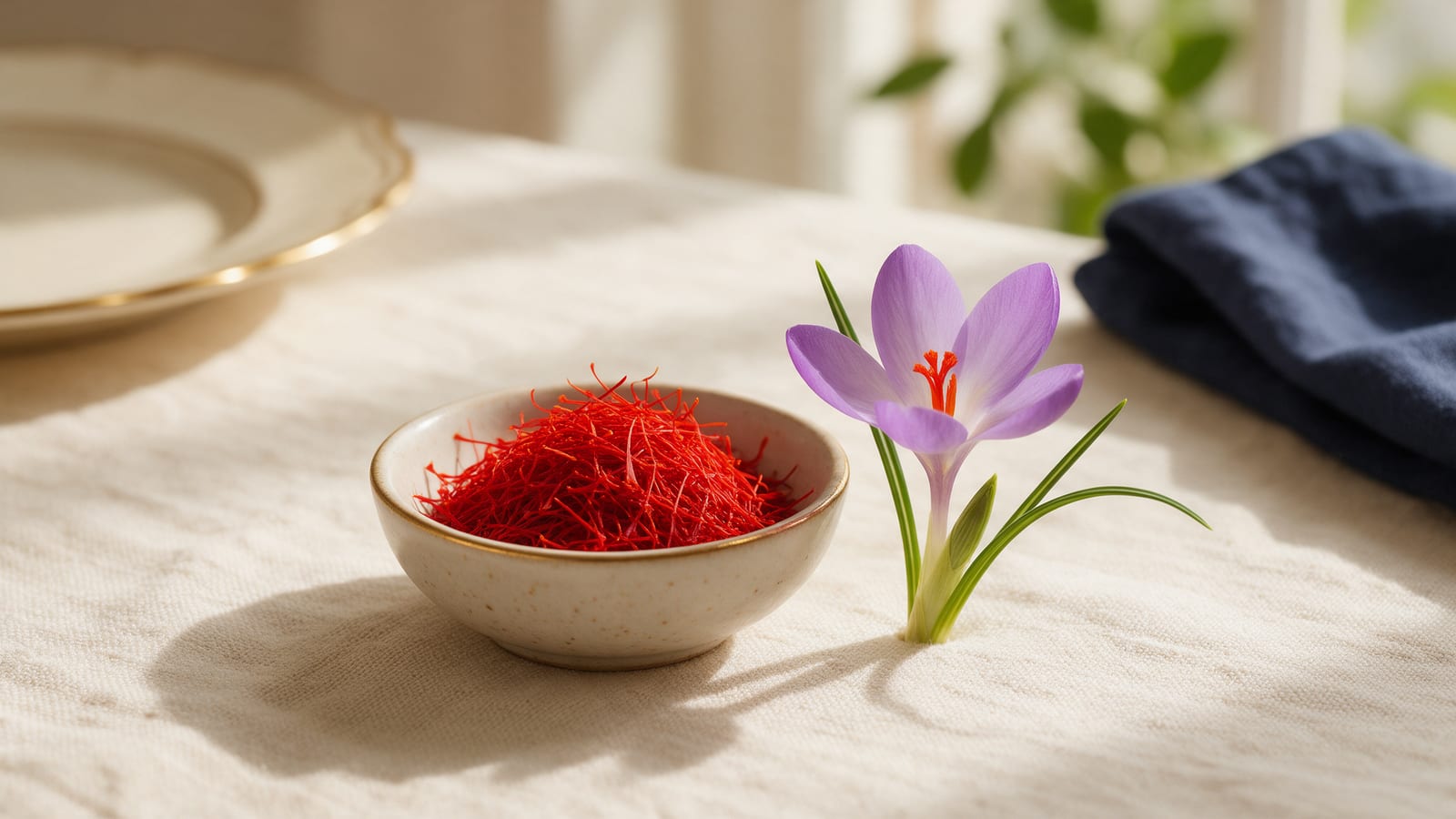
Saffron (Crocus sativus L.) is a spice traditionally used in food and has also attracted scientific interest for its potential effects on mood and emotional wellness. Researchers have studied saffron supplements to understand whether they may help support mood and reduce symptoms of depression and anxiety.
Clinical research has reported some promising findings, but the results are not consistent across all assessment methods. A 2026 systematic review of 34 randomized controlled trials found improvements in certain self-reported depression and anxiety scores, while other measures showed no significant effects. These findings highlight the importance of understanding both the potential benefits and the limitations of current research.
In this article, we will explore what human studies say about saffron and emotional wellness, how strong the available evidence is, and what to consider regarding safety. The goal is to help readers understand the research without overstating what saffron supplements can do.
What Is Saffron?
Saffron (Crocus sativus L.) is a spice obtained from the dried red stigmas of the saffron flower. It contains several bioactive compounds, including crocin, crocetin, picrocrocin, and safranal. These compounds contribute to saffron’s characteristics and are studied in research on its composition and commercial quality.
Saffron is used as a food spice, and it has also attracted scientific interest for its potential effects on health. However, information about saffron’s chemical composition does not, by itself, establish its effects on mood or emotional wellness. Those potential effects need to be evaluated separately through human clinical research.
Source: PubMed — Detection of Saffron’s Main Bioactive Compounds and Their Relationship with Commercial Quality
What Does Research Say About Saffron and Mood?
Human studies have explored whether saffron supplementation may support mood and emotional wellness. Some findings are promising, but results are not consistent across all studies.
A 2025 clinical trial involving 202 adults found that taking 28 mg of a standardized saffron extract daily for 12 weeks improved the primary depression score more than a placebo. However, another 2025 trial found no significant improvement in its main measure of depressive symptoms, anxiety, and fatigue.
A 2019 systematic review of 23 studies also reported positive combined results for depression and anxiety symptoms. However, the authors noted concerns about publication bias and limited regional diversity in the research.
Overall, saffron shows potential, but more high-quality research is needed. Current evidence does not establish saffron as a treatment or cure for depression or anxiety.
- Source 1: Kell et al., 2017 — saffron extract and mood
- Source 2: Mahmoudi et al., 2026 — systematic review and meta-analysis
- Source 3: Lopresti et al., 2025 — 202-adult clinical trial
Safety, Side Effects, and Precautions
A 2026 systematic review of 102 clinical trials and one case report found that saffron was generally well-tolerated. Gastrointestinal problems were the most frequently reported side effects and were usually minor and self-limiting. The review estimated an adverse-event incidence of approximately 17.5% across the included evidence.
However, the authors noted that potentially significant adverse events may occur with higher doses or prolonged use. They recommended considering clinical monitoring in these circumstances. The findings do not establish that every saffron supplement is safe for everyone, or that long-term use is risk-free.
If you are considering a saffron supplement, discuss its suitability with a qualified healthcare professional, particularly if you plan to use it regularly or at higher doses.
Source: Hasheminasab et al., 2026 — Adverse Events of Saffron
Source: Dai et al., 2020 — Safety and Efficacy of Saffron
Conclusion
Saffron has shown promising results in some human studies examining mood and emotional wellness. However, findings are not consistent across all studies, and more high-quality research is needed to understand its effects and long-term safety.
Saffron supplements should not be considered a replacement for professional care for depression or anxiety. Understanding the available evidence, possible side effects, and product quality can help consumers make more informed decisions about supplementation.